

- Home

 Literature
- Books
- New arrivals
- Architecture Books for children
- Architecture and Color
- Architecture and theory
- Architecture and drawing
- Healthcare architecture
- Biodiversity
- Housing
- Urban design and planning
- EPUB
- Guides
- Japanese architecture
- Art and design
- Garden and landscape architecture
- Material
- Monographs
- Public buildings
- Starting up a practice
- Exhibitions
- Transformation
- UIA 2023 CPH
- Out of Print and Rare Books
- Wellfare Architecture
- Ecology and sustainability
- Teaching and research
- Print
- Design
- Office
- Home
- Garden
- Accessories
- Makers and brands
- AirBird
- Arckit
- Arne Jacobsen Watches
- Alvar Aalto
- Architectmade
- Artek
- Asemi
- Atelier YUL
- Blackwing
- Blockitecture
- Brdr. Krüger
- Chalk Copenhagen
- chic.mic
- Fellow
- Finn Juhl
- FLID Tools
- Frandsen
- Frandsen Grasp
- HAY
- Houe
- Huskee
- Isamu Noguchi - Akari
- Katrine Høyberg
- Kaweco
- Kintobe
- Kolekto
- LAMY
- Lars Vejen
- LARQ
- Lovi
- Maja Brix
- Michael Kvium
- Michala Eken
- Moebe
- Moleskine
- Mona Vander
- Motarasu
- Nähe
- Okamoto Shoten
- OYOY Living Design
- Peter Karph
- Poul Kjærholm
- Raawii keramik
- Raawii ARBA
- Raawii - OMAR
- Raawii - Mikael Kvium Jam Collection
- Raawii - Relæ
- Raawii - Strøm Collection
- Raawii Thing
- Ro Collection
- Røros Tweed
- Sibast Furniture
- SILObySILO
- Simon Hjermind Jensen - Lamps
- S.N.S. Herning
- Sofie Lunøe
- Sonnenleder
- Sowvital
- The Atelier
- Toyo Steel
- Traveler's Company JP
- Verpan
- Vitra
- Nähe
- Accessories
- New
-

-

-
 0
0

Cart is empty

Gottlob - En fremragende formgiver
Every day, thousands of people cross the bridges of architect Kaj Gottlob that transformed Copenhagen: Knippels Bridge (1935) and Langebro (1954). Two bridges that connect the city, whose copper‑green towers still stand as beloved motifs for the design nation of Denmark. This is the first book about one of Denmark’s great architects and designers, by Jens Lindhe, with an essay by Uwe Bødewadt.
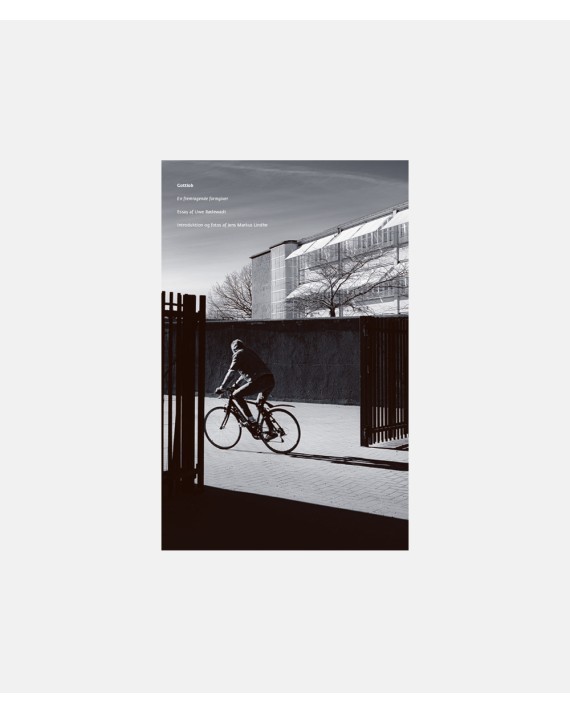
Every day, thousands of people cross the bridges of architect Kaj Gottlob that transformed Copenhagen: Knippels Bridge (1935) and Langebro (1954). Two bridges that connect the city, whose copper‑green towers still stand as beloved motifs for the design nation of Denmark. This is the first book about one of Denmark’s great architects and designers, by Jens Lindhe, with an essay by Uwe Bødewadt.
The author, architect Uwe Bødewadt, is among the first to have examined Gottlob’s surviving business archive. With his essay, Bødewadt has framed Gottlob both as an architect and as a person, while also adding new insight into the conditions under which architects worked during the dark years of the Second World War.
Gottlob’s architectural language was rooted in his extensive knowledge of architectural history as a professor of surveying at the Royal Danish Academy of Fine Arts, and was early on deeply influenced by the modernist impulse he encountered at the Paris World Exhibition in 1925. Throughout his career, he remained faithful to the soft, rounded, and human modernism that characterized the Nordic interwar years. In the modernist fast lane, Le Corbusier won the debate over how “pure” modernism should be with his hard-edged, programmatic architecture. Architecture became a social project, and the solution was houses cast in concrete elements.
Gottlob’s architecture and design are not about style, but about attitude and scale. A building may be as angular as it wishes, as long as it is soft where it meets your body. In large buildings, scale is broken down to humanize them. Gottlob was not afraid of comfort and coziness. Nor of color. Where your hand touches the building, you should feel warmth—not cold.
A shining example of this is the massive Egmont College (1953–57), which plays to the grand scale of Fælledparken. From a distance, the college is a monstrous building, but beneath the light canopy at the entrance awaits the foyer’s undulating ceiling, a fireplace radiating warmth and intimacy, and twisted Baroque columns made from reused materials. Effective—yes. Magnificent—yes. And decorated by visual artist Henrik Starcke using recycled ceramic bricks and other building materials—entirely in the spirit of our time.
Gottlob was also responsible for the majority of the construction in the University Park area. Other well-known works include the Danish Students’ House in Paris (1928), Lukas Church in Aarhus, a series of private homes, and municipal schools—pragmatic buildings for everyday needs. His adventurous school buildings on Samosvej, the School for Children with Disabilities, and the School by the Sound (1937–1938) are today iconic structures.
After retirement, Gottlob worked diligently to preserve our cultural heritage. This very interest in cultural heritage has been documented by architect and photographer Jens Lindhe through monographs on the Royal Building Inspectors Eva and Nils Koppel, Svenn Eske Kristensen, and now Kaj Gottlob. All were able to engage with historic buildings in a modern way. Kaj Gottlob is the final publication in this series—thus completing the circle.
- Author
- Jens Lindhe and Uwe Bødewadt
- Format
- Hard cover
- Published
- 14.10.2025
- Language
- Danish
- ISBN
- 9788791984464
- Publisher
- Jens Bertelsen
- Page count
- 216