

- Home

 Literature
- Books
- New arrivals
- Architecture Books for children
- Architecture and Color
- Architecture and theory
- Architecture and drawing
- Healthcare architecture
- Biodiversity
- Housing
- Urban design and planning
- EPUB
- Guides
- Japanese architecture
- Art and design
- Garden and landscape architecture
- Material
- Monographs
- Public buildings
- Starting up a practice
- Exhibitions
- Transformation
- UIA 2023 CPH
- Out of Print and Rare Books
- Wellfare Architecture
- Ecology and sustainability
- Teaching and research
- Print
- Design
- Office
- Home
- Garden
- Accessories
- Makers and brands
- AirBird
- Arckit
- Arne Jacobsen Watches
- Alvar Aalto
- Architectmade
- Artek
- Asemi
- Atelier YUL
- Blackwing
- Blockitecture
- Brdr. Krüger
- Chalk Copenhagen
- chic.mic
- Fellow
- Finn Juhl
- FLID Tools
- Frandsen
- Frandsen Grasp
- HAY
- Houe
- Huskee
- Isamu Noguchi - Akari
- Katrine Høyberg
- Kaweco
- Kintobe
- Kolekto
- LAMY
- Lars Vejen
- LARQ
- Lovi
- Maja Brix
- Michael Kvium
- Michala Eken
- Moebe
- Moleskine
- Mona Vander
- Motarasu
- Nähe
- Okamoto Shoten
- OYOY Living Design
- Peter Karph
- Poul Kjærholm
- Raawii keramik
- Raawii ARBA
- Raawii - OMAR
- Raawii - Mikael Kvium Jam Collection
- Raawii - Relæ
- Raawii - Strøm Collection
- Raawii Thing
- Ro Collection
- Røros Tweed
- Sibast Furniture
- SILObySILO
- Simon Hjermind Jensen - Lamps
- S.N.S. Herning
- Sofie Lunøe
- Sonnenleder
- Sowvital
- The Atelier
- Toyo Steel
- Traveler's Company JP
- Verpan
- Vitra
- Nähe
- Accessories
- New
-

-

-
 0
0

Cart is empty

Circular Construction - Materials Architecture Tectonics
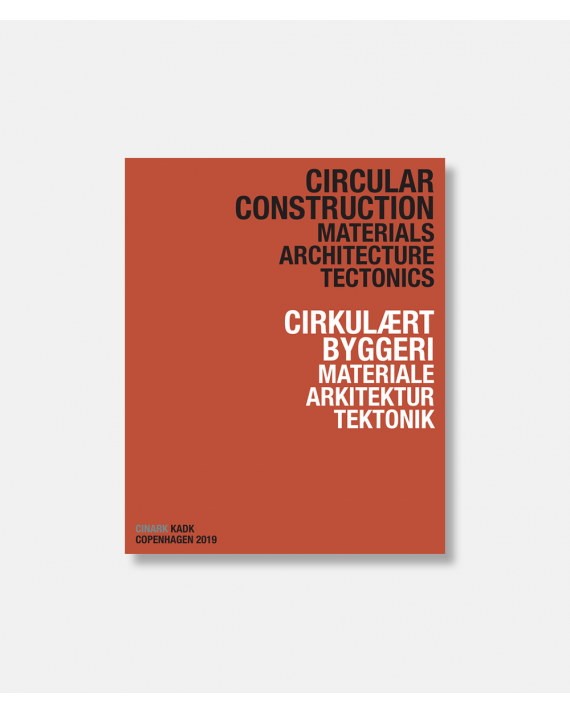
Circular Construction Materials Architecture Tectonics. This book depicts a set of concrete examples of how to build in accordance with circular principles by using non-toxic, bio-based materials and low energy consumption, in other words by means of radical tectonics.
Circular Construction Materials Architecture Tectonics. This book depicts a set of concrete examples of how to build in accordance with circular principles by using non-toxic, bio-based materials and low energy consumption, in other words by means of radical tectonics.
Circular Construction Materials Architecture Tectonics. This book depicts a set of concrete examples of how to build in accordance with circular principles by using non-toxic, bio-based materials and low energy consumption, in other words by means of radical tectonics.
Building by use of circular principles means that we have to think about materials, constructions and buildings – their construction, life and afterlife, radically different from what we do today.
It simply points to construction methods where we:
- prioritize renewable bio-based materials over rare, non-renewable natural resources.
- avoid environmentally harmful substances in materials, constructions and construction processes.
- use green energy sources to reduce CO2-emmisons.
- ensure that resources are not wasted, but can be included in new technological and biological cycles.
- incorporate social, contextual and cultural dimensions that are similarly vital to a green transition.
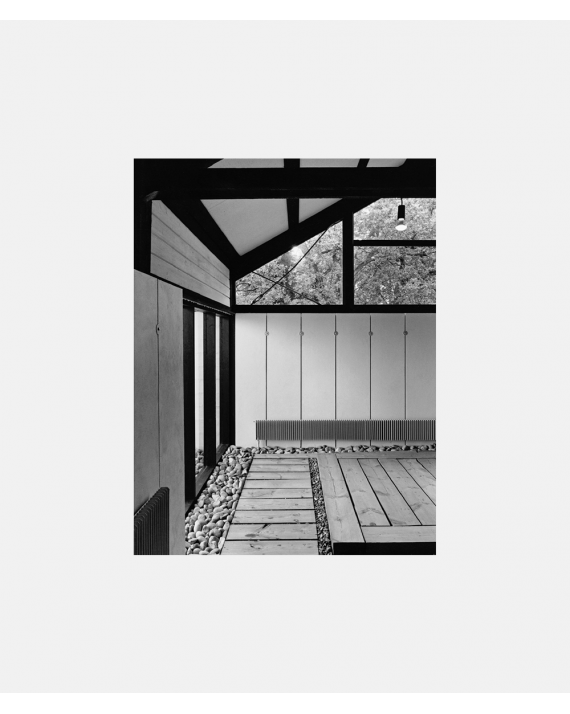
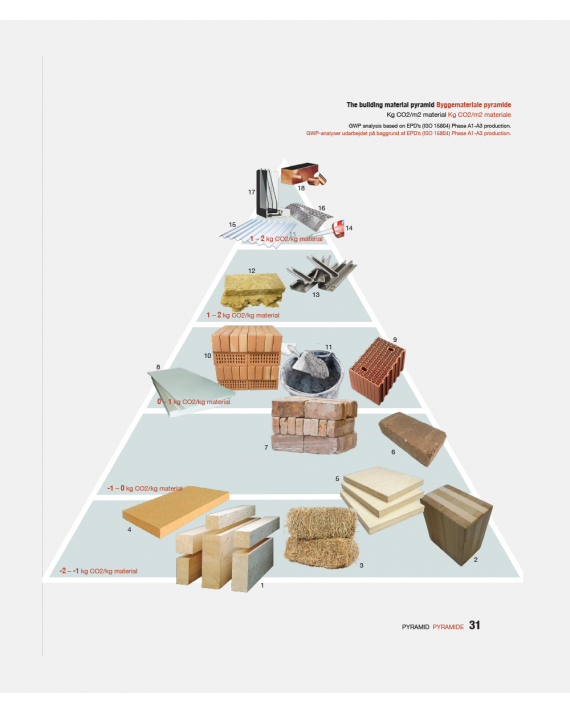
This book depicts a set of physical tectonic examples of how such radical modes of construction might look like. Three wall structures in brick, wood and straw from the exhibition Circular Economics in Architecture and Design at KADK in 2017 are shown in a series of pictures, drawings and analyzes of their performance. This material is supplemented by short articles exploring various structural frameworks, economic scenarios and aesthetic potentials associated with circular thinking. Based on knowledge form research, it is the intention to create qualified documentation and a visionary launch pad for improvement of a circular based architecture.
- Author
- Anne Beim
- Published
- 2019
- Language
- Danish/English
- Publisher
- KADK/CINARK
- Binding
- Soft cover
- Page count
- 112
- Editorial group
- Anne Beim, Julie Zepernick Jensen & Lykke Arnfred